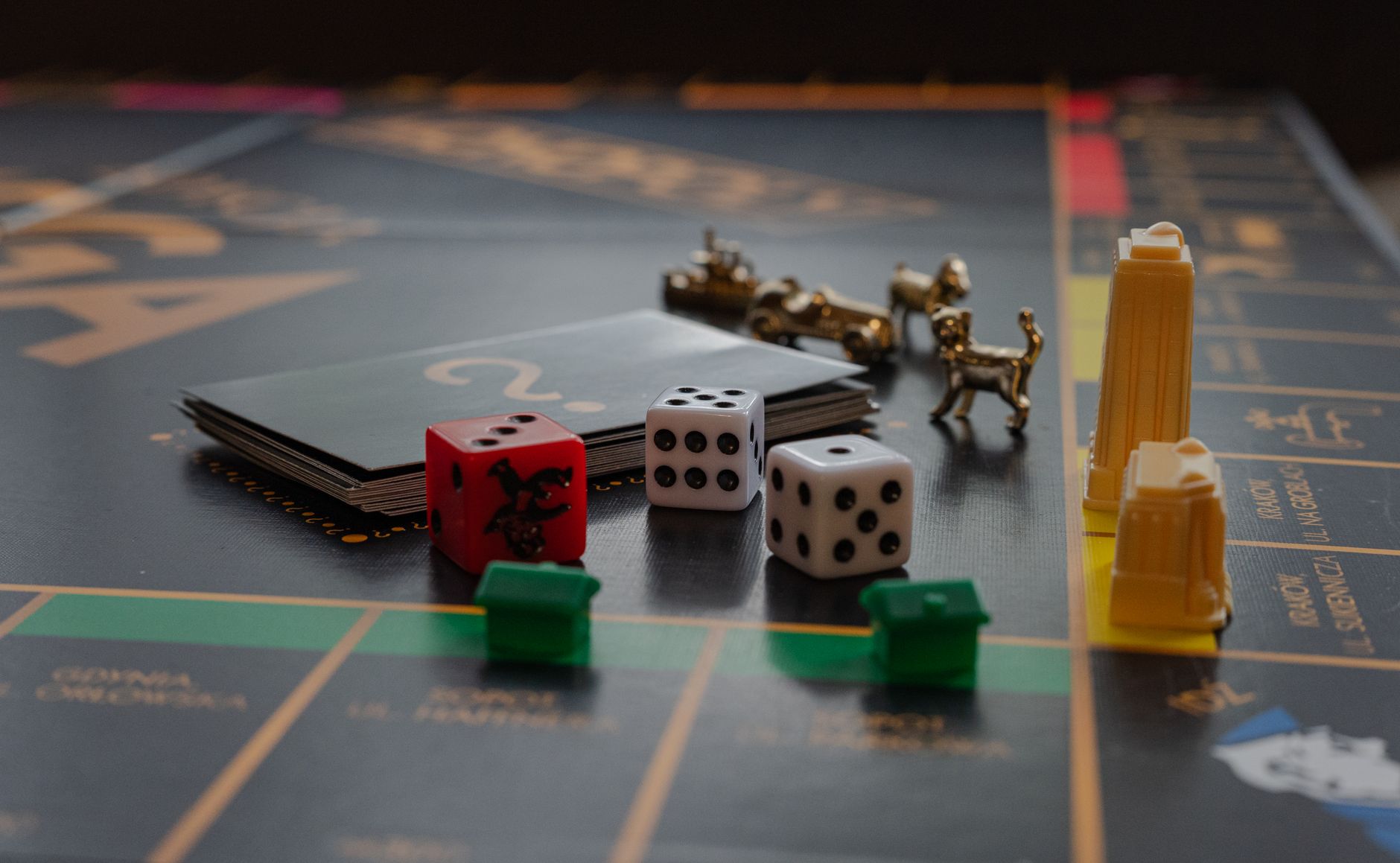
Stop Playing the Game

Photo by Annashoots ud83dudcf7 on Pexels.com

There is a famous quote from one of Shakespeare’s plays; “All the world’s a stage, and all the men and women are merely players.”

Can I offer to you another perspective, “All the world’s a game, and all of us are players.” We are not, as Shakespeare claims, “merely players”, as if all is beyond our control. But we are definitely players in this game of life.

Now, let’s be clear from the start. I acknowledge, as I’m sure you do also, that there are many situations and circumstances outside of our realm of influence. The overall game, the game on a world scale. Lets set that aside for the sake of this perspective.

Every day there are games at play within our lives, that maybe we don’t realise we can choose to stop playing. Games in relationships. Games with our health. Games at work. Games, even within our own thoughts.

Do you realise you can choose to stop playing? You don’t have to catch every ball. You don’t need to play every hand. You don’t have to respond to every move. And you definitely do not need to continue to play a game, when someone else keeps changing rules.

When you begin to observe the games being played around you; the choice becomes Yours. To play or not to play? that is the question. Many of us keep doing what we have always done, believing we have no alternatives. I’m here to encourage you. You do have options. You do have choices. You can decide to just ‘Stop Playing the Game’…

Be a Do’er..

What does it mean to ‘Be a Do’er’? Let’s use an example from the Bible; in the Book of James, James uses the analogy of looking into a mirror. Many of us in this era of Self-Help overwhelm, spend enormous amounts of time gathering information on how to be a ‘better You’.

But, are you like the person James speaks of? After looking intently at yourself in the mirror; seeing the things that need to be changed, improved, and maybe even discarded; promptly turn away and forget what you look like. Meaning, forget what you need or desire to address. Gathering endless data to no personal advantage.

The person who chooses to ‘Be a Do’er’ doesn’t just gather more and more information, via books, influencers, channels, etc.. They actually ‘Do’ what they have determined to do!! They become not just a hearer, they become a Do’er of what they heard. Changing those habits. Making that difficult choice. Addressing that unhelpful behaviour. Understanding it is a process, and that process; is the consistent practice of applying that which you have learned.

Learning for the sake of learning is of no real benefit. The benefit only comes, when we determined to ‘Do’, (put into action), that which we have learned.

The Power of Forgiveness

Do you understand that ‘The Power of Forgiveness’ is for those who forgive? Please don’t be deceived, forgiveness is to benefit the forgiver, not those to whom forgiveness is granted.

What treasures await us on the other side of Forgiveness? Healthier relationships, less anxiety, less stress, improved mental health, lower blood pressure, stronger immune system, improved heart health and fewer symptoms of depression. Forgiveness definitely benefits the forgiver.

Forgiveness is not easy. Nobody is suggesting that it is; but it is necessary. But please remember this one final point; Forgiveness and Trust are not the same thing. Forgiveness is given to set yourself free. Forgiveness is freedom, but Trust is earned…

Be Slow to Anger

A person who practices wisdom, has determined to gain understanding, is quick to hear and slow to speak; this is a person who has consciously and actively sought to develop a habit of Self-Discipline.

When this ability to control Self; emotionally, mentally, physically and spiritually, forms the solid foundation of behaviour, to ‘Be Slow to Anger’ organically becomes the default response.

In our crazy world, anger, frustration, and the like, have risen to epidemic proportions, but each of us still have the power of choice over our own selves. Want to effect change within, and without? Be responsible for your emotions and actions, and ‘Be Slow to Anger’.

Be Slow to Speak

Let’s go ahead and expand on the previous post, ‘Be Quick to Hear’ by adding another practice; ‘Be Slow to Speak’.

When we include ‘Being Slow to Speak’ it enables a shift to take place; turning our perspective from ourselves toward others. Because if my consistent focus when communicating, is purely to express my thoughts, my desires, my opinions; that’s not communicating at all. That’s a monologue, not a dialogue. One person, one viewpoint, one focus, one outcome, does not make for a healthy mind, or for that matter, healthy relationships.

There’s an old proverb that says “Even a fool appears wise if he keeps his mouth shut”.

Want to be wiser? Start here; ‘Be Quick to Hear’ and ‘Be Slow to Speak’. Practice these two attitudes with intention and with an expectation.

Be Quick to Hear

Why develop this habit of ‘Being Quick to Hear’? Firstly, to prioritise hearing what is being said, over what we would say; immediately opens the door to a greater knowledge and understanding of what is being communicated.

Secondly, it is an excellent way to add value to relationships, especially those closest to you. One of the deepest needs we have as human beings, is the need to be heard. The innate desire to be truly understood.

So here is your challenge. The very next conversation you engage in ‘Be Quick to Hear’. Don’t be thinking of your response, or objection, or even maybe, taking offence. Setting aside all distractions, focus on what is being said. What is this person communicating to you. What is it they need you to know and understand. Remember, to Listen is to Love…